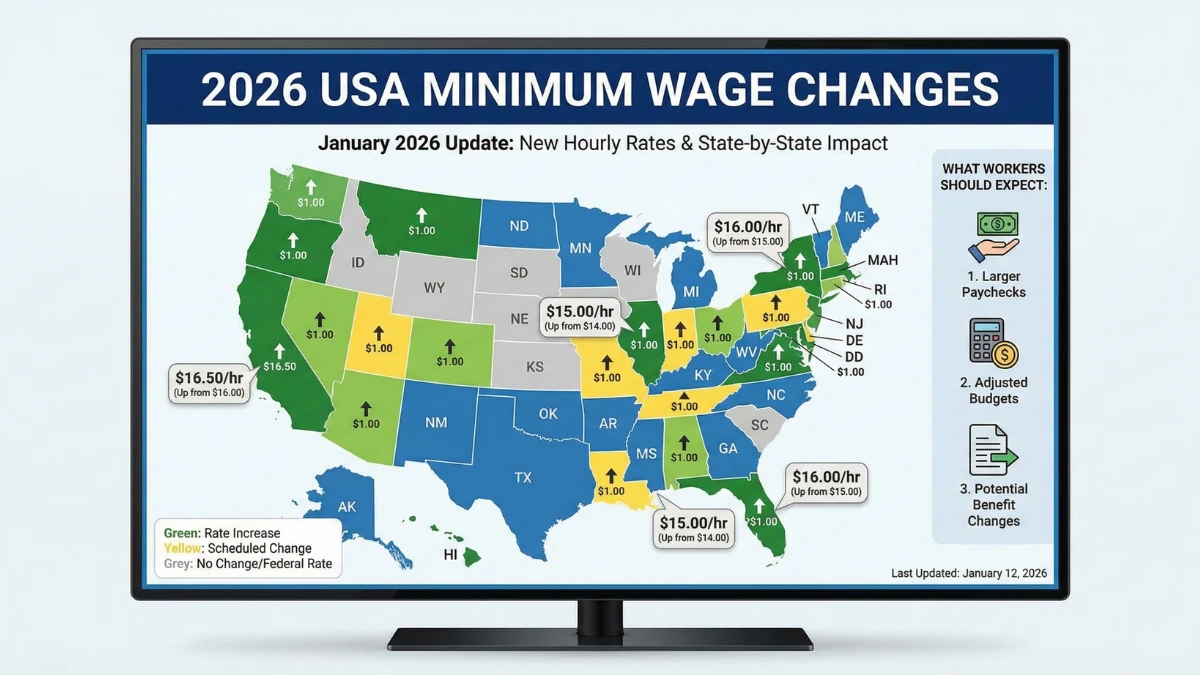
Minimum wage rules across the United States continue to evolve in 2026, with several states implementing new hourly pay rates while others remain unchanged at the federal level. These updates affect millions of workers and employers, especially in states that adjust wages annually for inflation. This article explains what has changed for 2026, how state-by-state minimum wages work, and what official guidance says so far.
Is There a New Federal Minimum Wage in 2026?
As of 2026, the federal minimum wage remains unchanged, meaning there is no nationwide hourly increase enacted by Congress. The federal rate continues to apply in states that have not set a higher wage floor, under oversight from the U.S. Department of Labor.

| Wage Level | Status in 2026 |
|---|---|
| Federal Minimum Wage | No change |
| State Minimum Wages | Several increases |
| Local (City/County) Rates | Higher in some areas |
| Automatic Inflation Adjustments | Yes (select states) |
| Nationwide Increase | Not approved |
Why State Minimum Wages Are Rising in 2026
Many states have laws that automatically adjust minimum wage each year based on inflation or cost-of-living formulas. These increases occur even when Congress does not act, resulting in a widening gap between the federal minimum wage and higher state-level rates.
State-by-State Minimum Wage Trends
In 2026, states fall into three main categories:

- States with automatic inflation-based increases
- States with scheduled multi-year wage hikes
- States that match the federal minimum wage
Workers are legally entitled to the highest applicable wage—federal, state, or local—where they work.
How Employers Must Apply the New Rates
Employers must follow the highest minimum wage in effect for their location. This means city or county rules may override state rates, and state rules may override federal law. Failure to comply can result in penalties and back-pay obligations.

Who Benefits Most From the 2026 Changes
Hourly workers in retail, food service, healthcare support, hospitality, and entry-level roles see the most direct impact. Younger workers and part-time employees are also disproportionately affected by minimum wage adjustments.
Tipped Workers and Special Wage Rules
Some states maintain separate wage rules for tipped employees, while others are gradually eliminating the tip credit. These rules vary significantly by state and should be checked carefully.

Key Facts Workers Should Know
- Federal minimum wage is unchanged in 2026
- Many states raised wages automatically
- Local laws may set even higher rates
- Employers must pay the highest applicable wage
- Wage increases do not require applications
Conclusion
The USA minimum wage landscape in 2026 reflects state-driven action rather than federal reform. While no nationwide increase has been enacted, workers in many states will see higher hourly pay due to inflation-linked or scheduled raises. Understanding your state and local wage laws is essential to ensure you are paid correctly.
Disclaimer
This article is for informational purposes only and does not constitute legal or employment advice. Minimum wage laws vary by location and may change. Always verify rates with official state labor departments or government sources.
