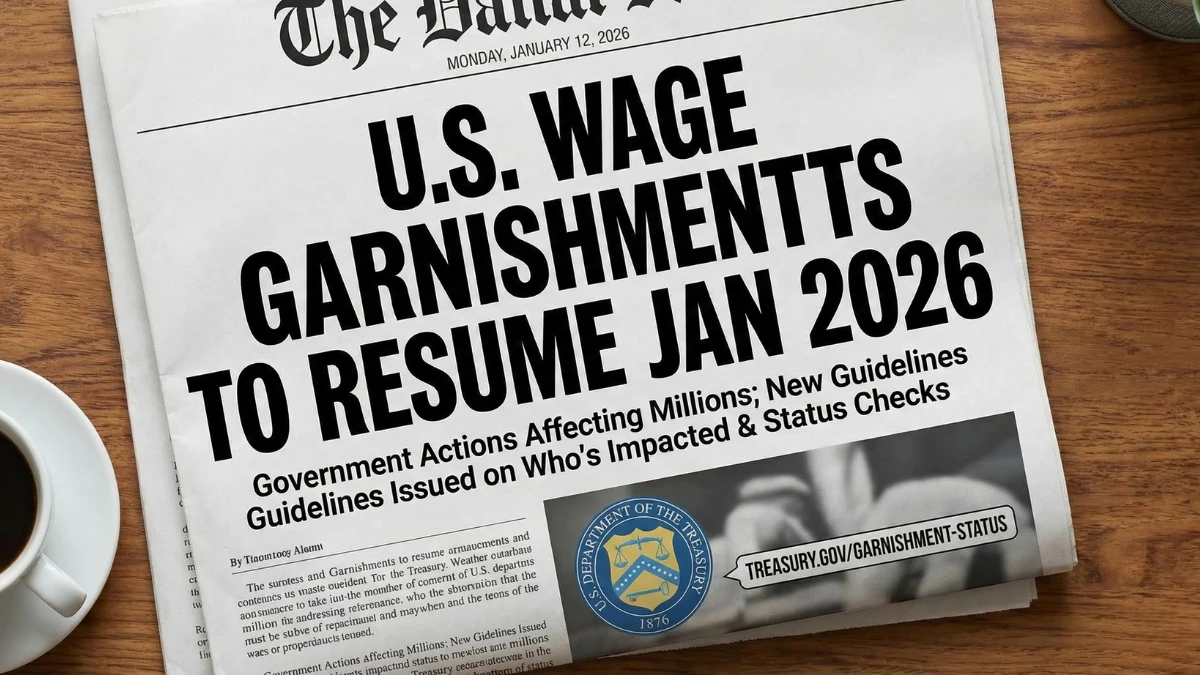
Beginning in January 2026, the U.S. government is expected to resume or expand wage garnishments for certain unpaid federal debts, catching many workers off guard. After years of pauses, relief programs, and delayed enforcement, garnishment actions are returning to normal operations. This article explains who may be affected, which debts are involved, how much can be withheld, and how to check your status before garnishments begin.
What Does Wage Garnishment Mean?
Wage garnishment allows the federal government to legally withhold a portion of your paycheck to recover unpaid debts. Employers are required to comply once notified, and garnishment can occur without a court judgment for some federal debts.

| Garnishment Detail | What to Know |
|---|---|
| Who Orders It | Federal agencies |
| Employer Role | Mandatory compliance |
| Court Required? | Not always |
| Paycheck Impact | Partial withholding |
| Advance Notice | Yes, required |
Why Garnishments Are Restarting in January 2026
Temporary protections introduced during earlier economic relief periods are expiring, and federal agencies are returning to standard debt collection rules. This shift affects borrowers and taxpayers who remain in default after extended pauses.
Who Is Most Likely to Be Affected
Wage garnishments in 2026 primarily target individuals with longstanding federal debt. The most common categories include defaulted student loans, unpaid federal taxes, and certain overpaid government benefits.

Federal enforcement is handled through agencies such as the U.S. Department of Education, the Internal Revenue Service, and the U.S. Department of the Treasury.
How Much of Your Wages Can Be Garnished
Federal law limits how much can be taken from each paycheck. Typically, up to 15% of disposable income may be garnished for federal student loans, while tax-related garnishments vary depending on filing status and exemptions.

How to Check If You’re at Risk
You can confirm your status by reviewing official notices, logging into your federal loan or tax account, and contacting the appropriate agency directly. Garnishments do not begin without prior notification, so reviewing mail and official messages is critical.
Can Garnishment Be Stopped or Reduced?
In some cases, yes. Options may include rehabilitation programs, repayment plans, hardship requests, or dispute filings, depending on the type of debt. Acting early provides the most flexibility.

What Employees and Employers Should Know
Once a garnishment order is issued, employers must comply or face penalties. Employees should not ignore notices, as unresolved issues can escalate quickly once enforcement begins.
Key Facts to Know Now
- Federal wage garnishments resume in January 2026
- Student loans and tax debt are most affected
- Employers must comply with notices
- Advance warning is required
- Early action can limit impact
Conclusion
The return of federal wage garnishments in January 2026 marks a significant shift for workers carrying unresolved government debt. Understanding your exposure, checking your status early, and responding to official notices can help reduce financial disruption before garnishments take effect.

Disclaimer
This article is for informational purposes only and does not constitute legal or financial advice. Garnishment rules may vary by debt type and individual circumstances. Always verify details with official government agencies or qualified advisors.