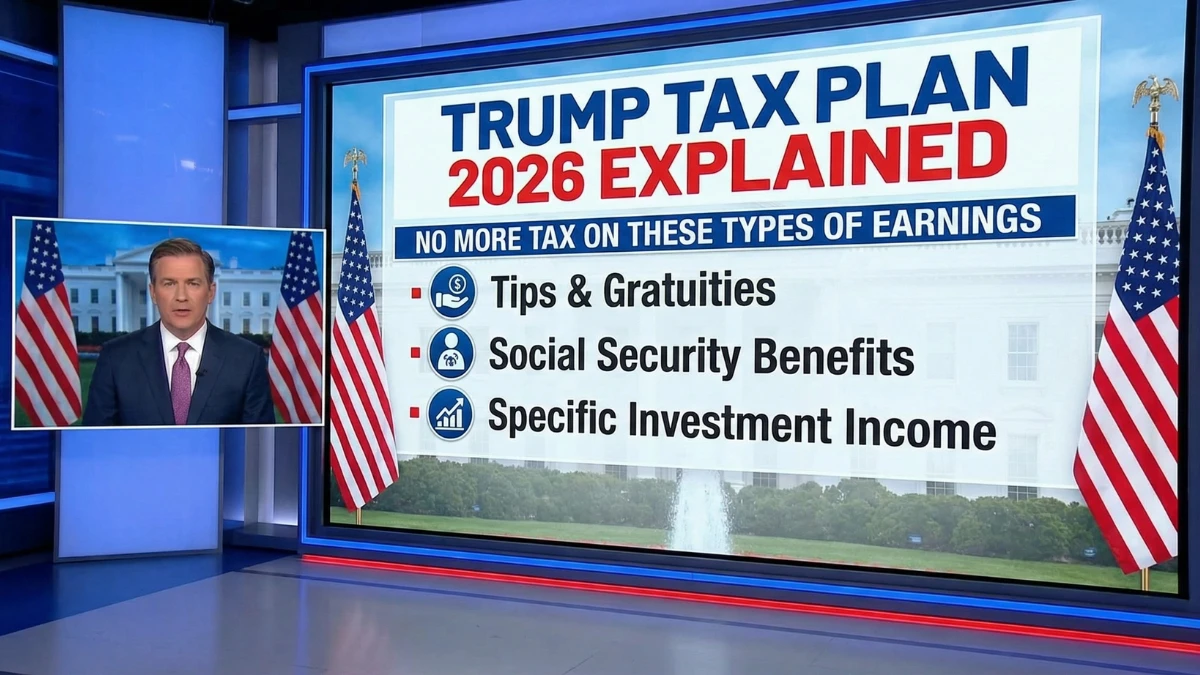
Discussion around the Trump Tax Plan for 2026 has intensified following claims that certain types of income would no longer be taxed, raising questions about who benefits and whether the proposal is official policy. This article explains what Donald Trump has proposed, which earnings are being discussed, what is confirmed versus speculative, and what would need to happen for these tax changes to take effect.
What Is the Trump Tax Plan for 2026?
The Trump Tax Plan 2026 refers to a set of proposed tax policy ideas, not enacted law. These ideas build on earlier tax reforms and campaign statements suggesting targeted tax relief aimed at retirees, workers, and middle-income households. As of now, no new tax law has been passed implementing these changes.

| Tax Area | What’s Being Proposed | Current Status |
|---|---|---|
| Certain Earnings | Exempt from federal tax | Proposal only |
| Implementation Year | 2026 | Not approved |
| IRS Enforcement | Adjusted rules | No changes yet |
| Congressional Vote | Required | Not scheduled |
| Legal Authority | New legislation | Not enacted |
Which Earnings Could Become Tax-Free?
Claims about “no more tax on these earnings” usually focus on specific income categories, often including Social Security benefits, tips, overtime pay, or certain retirement income. These ideas have appeared in speeches and policy discussions, but none are currently tax-free under federal law beyond existing exemptions.
Is This Change Confirmed or Guaranteed?
No. These proposals are not confirmed tax changes. Any reduction or elimination of federal taxes on specific earnings would require Congressional approval, updated IRS rules, and a signed bill. Until that happens, existing tax rules remain in place.

Who Would Benefit the Most If Approved?
If enacted, such changes would primarily benefit retirees on fixed incomes, service workers, and middle-income earners—depending on which earnings categories are ultimately included. High-income earners would likely see limited or no benefit.
Why These Claims Are Spreading Now
Election-cycle messaging, rising living costs, and public frustration with taxes make targeted tax relief proposals especially appealing. Online headlines often blur the line between proposals and law, leading many to believe changes are already in effect.

What Taxpayers Should Do Right Now
Taxpayers should continue filing under current IRS tax rules and rely only on official government announcements. Making financial decisions based on unapproved tax proposals can lead to unexpected tax liabilities.
Key Facts to Remember
- No new tax-free earnings are approved for 2026
- All current tax rules still apply
- Proposals require Congressional action
- IRS rules have not changed
- Campaign promises are not law
Conclusion
The Trump Tax Plan 2026 includes proposals that could eliminate taxes on certain types of earnings, but these ideas are not yet law. Until Congress acts and the IRS updates regulations, taxpayers should treat claims of “no more tax” as policy discussion—not confirmed tax relief.

Disclaimer
This article is for informational purposes only and does not constitute tax or legal advice. Tax laws may change. Always consult official IRS guidance or a qualified tax professional for personalized advice.
