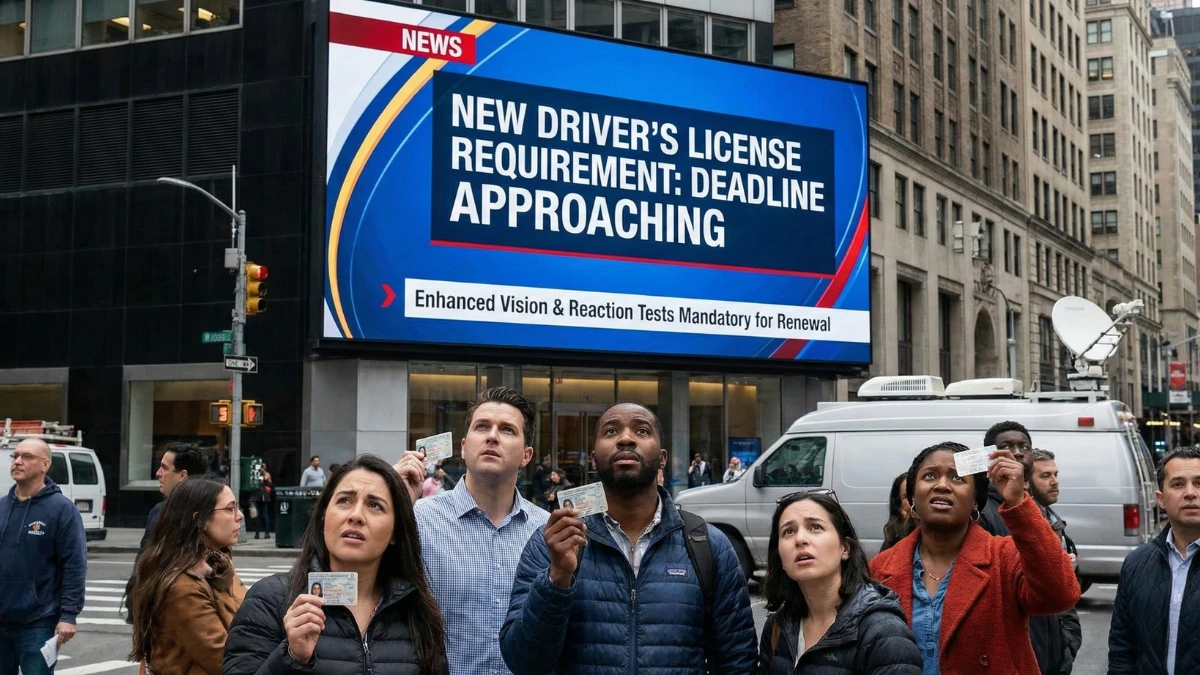
Across the United States, driver’s license rules are tightening, and for some motorists, failing to meet new or updated requirements could mean losing the ability to renew or keep a valid license, marking a shift toward stricter safety, identity, and compliance standards rather than an outright nationwide ban.
Who Sets Driver’s License Requirements
Driver’s license rules are set and enforced by state Departments of Motor Vehicles (DMVs), with guidance and safety standards influenced at the federal level by the U.S. Department of Transportation, meaning requirements can vary depending on where you live.

New Driver’s License Requirements – Overview
| Category | Details |
|---|---|
| Authority | State DMVs |
| Who Is Affected | Drivers who fail updated criteria |
| Common Requirements | Vision, identity, medical fitness |
| Renewal Method | In-person or online (state-based) |
| Nationwide Ban | ❌ No |
| Purpose | Road safety & identity verification |
What the “New Requirement” Usually Means
In most cases, the so-called new requirement refers to stricter enforcement of existing rules, such as vision standards, medical fitness declarations, identity verification (REAL ID), or in-person renewals after a certain age or time period.
Who May Lose the Ability to Renew
Drivers may face license suspension or non-renewal if they fail vision tests, do not provide required identity documents, ignore medical reporting rules, or miss mandatory renewal steps, rather than because of a blanket policy change.

REAL ID and Identity Verification
Many states now require REAL ID–compliant documentation for certain license uses, and drivers who do not upgrade or provide proper documents may be limited in how their license can be used, though it may still function for basic driving.
Why States Are Enforcing Rules More Strictly
States cite road safety, fraud prevention, and federal compliance as reasons for tighter enforcement, especially as populations age and digital identity standards expand.

What Drivers Can Do to Stay Licensed
Checking state DMV notices, scheduling vision or medical exams early, gathering identity documents in advance, and renewing on time helps drivers avoid unexpected license issues.
Key Points Drivers Should Know
- There is no nationwide cancellation of driver’s licenses
- Requirements vary by state, not federal mandate
- Vision, medical, and ID checks are the most common issues
- Failure to meet rules affects renewal, not current validity
- Early preparation prevents license loss
Conclusion
The phrase “goodbye to driver’s licenses” reflects stricter enforcement—not a mass revocation—and drivers who understand and meet updated requirements can continue driving legally without interruption.

Disclaimer
Driver’s license laws vary by state and can change at any time. This article is for informational purposes only; always consult your state DMV for official and up-to-date requirements.
